
Last year I had the privilege of visiting the Sagrada Familia Basilica in Barcelona. What a gorgeous, imaginative, exhuberant place of worship. It was the most amazing structure, the exterior with intricate carvings of the Nativity and Easter stories, and luscious motifs of plants and animals. And the interior was flooded with a kaleidoscope of colour and light.
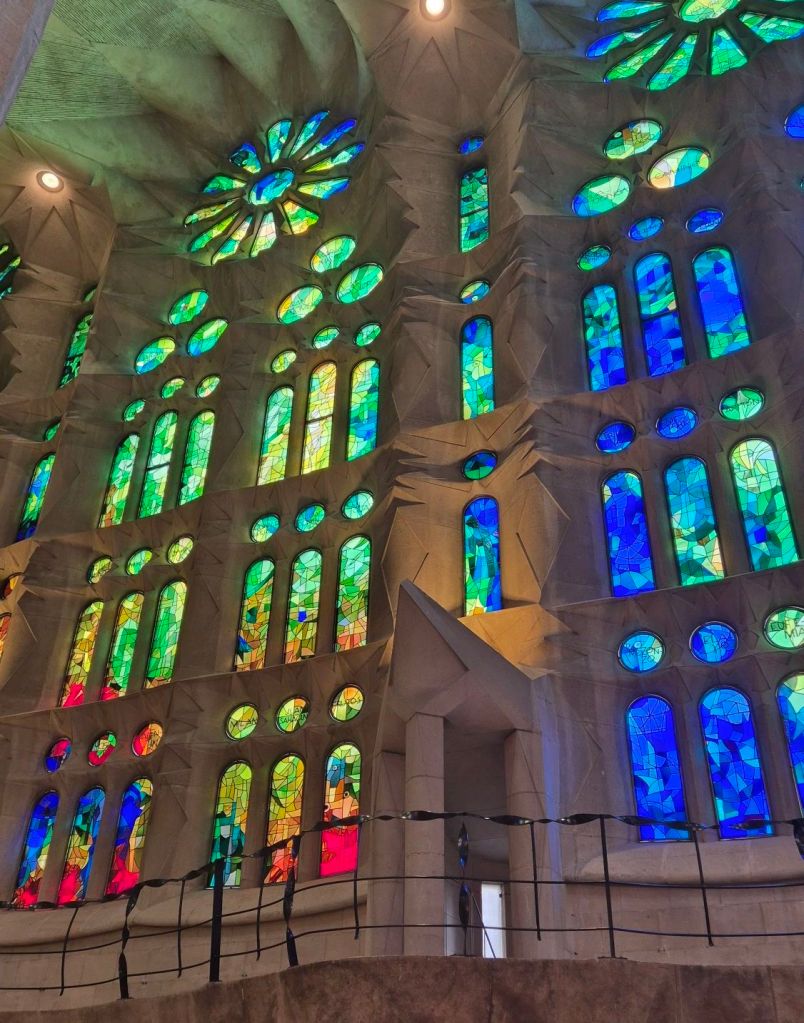
Although the building was full of tourists, it still felt like a place built for God’s glory, and every time you turned round, you saw a new detail which caught your attention. It is a building of creativity and rich symbolism.
The really striking thing about the basilica is not just the awesome building dedicated to God. It was also the back story of Antoni Gaudi himself. He was a Catalan architect who designed many buildings around Barcelona and in northern Spain. His work was distinctive- with swirling interweavings of colour and form, of nature and of Christian symbols.
When it came to the Sagrada Familia, this was such a mammoth project, Gaudi knew it might not be finished in his life time. He started work on it in 1882, and had a whole team of architects and craftsmen working on it. It was a struggle to get people to fund such a complex structure. This was Gaudi’s final project, and he lived humbly, working on it each day. In 1926 he was hit by a tram on the street. He was dressed in an old shabby coat, and no one recognised him, so it took a while for him to be taken to hospital, and he subsequently died of his injuries.
Such a tragic story- a man with such a devotion to God, such a dedication to his art, lay injured in the streets in the city, unknown and unrecognised.
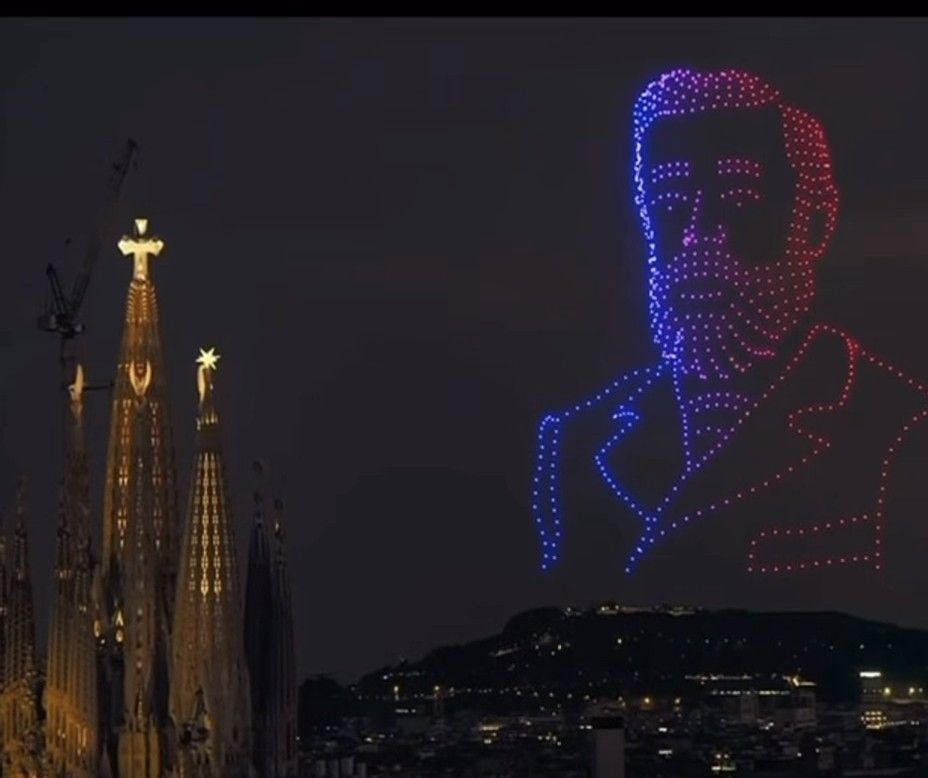
I was reminded of all this, when I saw the celebrations of the final stone being put in place last week. It was a beautiful celebration, with the fireworks and torch light worship. After 144 years, it was finally finished and Gaudi’s vision was realised. The representation of Gaudi in the sky looking at his creation with approval seeemed so fitting and so healing. It was just a pictorial representation, but the inclusion of this image felt like a spiritual completion. After all the setbacks and difficulties, at last he knew his creation was finished, and a blessing and inspiration to many. It felt so moving and meaningful.
It makes me think what is the legacy we are leaving behind us? We might not leave stunning architecture, but we might leave an example of what kindness, or love might look like (within our limitations). As Christians too, what is the legacy we leave?We do pray for the generation to come, but the younger generation often perceive we have left them a legacy of conflict, climate change and a culture of greed and individualism. In the midst of such contemporary chaos, the concept of legacy challenges all of us- how can we leave something worthwhile?
In psalm 78, the psalmist says: ‘We will tell the next generation the praiseworthy deeds of the Lord, His power and the wonders He has done’. The psalmist wanted to share with the next generation the love snd wonder of God. Are we bold enough to share our faith also, the thing that is most precious to us, and to commit to prayer for this world. Surely, this is the very best that we can do.
Eternal God, our lives are finite, like grass that grows, flourishes and fades away. May we use each day for Your glory’s sake, making the most of every minute. Forgive us Lord Jesus that sometimes we are consumed with petty trivialities and superficial pleasures. Teach us to have a vision of what You can do through us. May we listen to Your Holy Spirit inspiring us to be faithful, loving, creative beings. Show us how to love, and how we may intentionally and prayerfully seek to leave a meaningful legacy to all those who come after us, so we can bless the generation to come, in Jesus’ name, Amen

